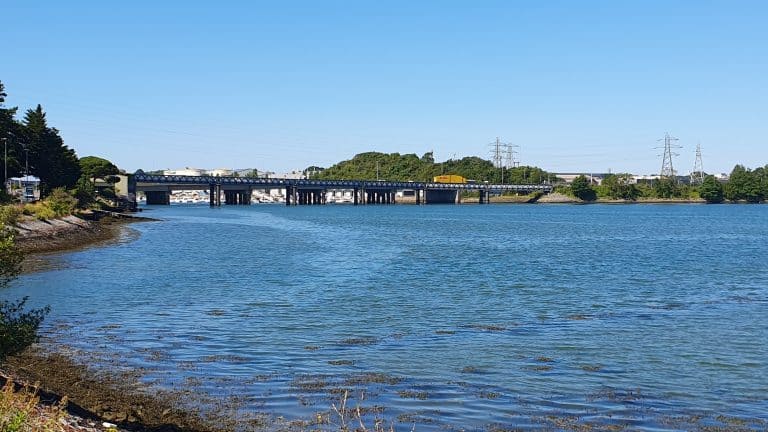
The River Plym flows into the sea through an expanse of water known as the Cattewater which in turn flows into a natural harbour known as Plymouth Sound. Before the Cattewater was named the original settlement known as Sutton was located at the mouth of the river Plym hence the name of our City is Plymouth.
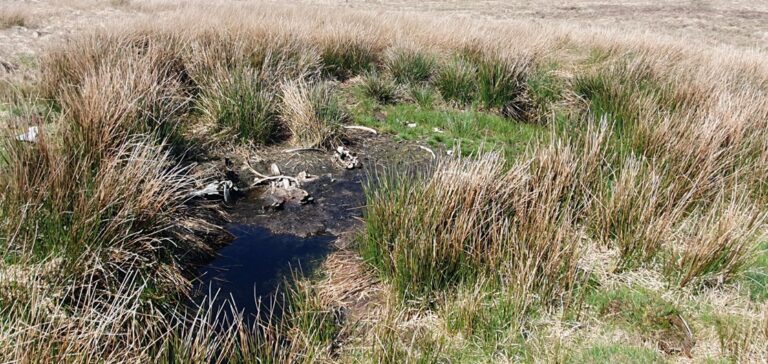
The river flows for a bit more than 17 miles from it’s source marked on the OS map as Plym Head a marshy bog high up on the moor between Great Gnats head and Crane Hill. The walk will take you there.
I have created an unofficial long distance trail all the way from Laira Bridge where the river Plym now officially ends all the way to Plym Head. This wasn’t difficult as there is either a road cycle track footpath or accessible open moor all the way from the sea to the source. What I have done for you is to divide the route up into 8 easy walks. Where one walk stops another starts although there is a little gap in a few instances. You will start by walking through the 18th Century Saltram Estate owned by the National Trust. This is a splendid start to the trail especially for bird watchers or those wanting an easy mostly entirely level walk. You will end by finding your own way across just over half a mile of open moor using sheep tracks between the tussocks to walk from Plym Ford to Plym Head the only part where there is no obvious path to follow.
Click on the walk name or picture to download it to your phone. When doing the moorland sections do please make sure your phone is fully charged before setting off.
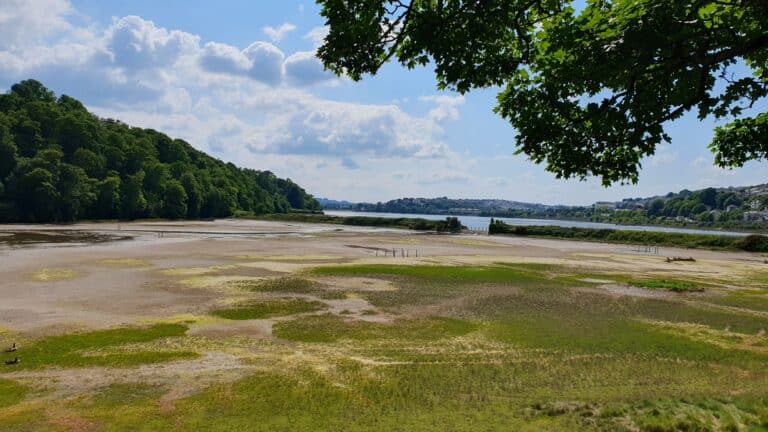
This is the first of 8 excursions up the river from Laira Bridge to Plym Head and starts at the small car park by the entrance to Chelson Meadows recycling centre PL9 7JA. The walk takes you along the edge of the river into the National Trust estate passing mud flats where you can see wading birds from their bird hide. The return goes back past Saltram House which if you haven’t been inside is well worth visiting.
The walk is about 3.5 miles and will take you about 2 hours to complete or a bit more if you have a coffee and cake at the Saltram House café.
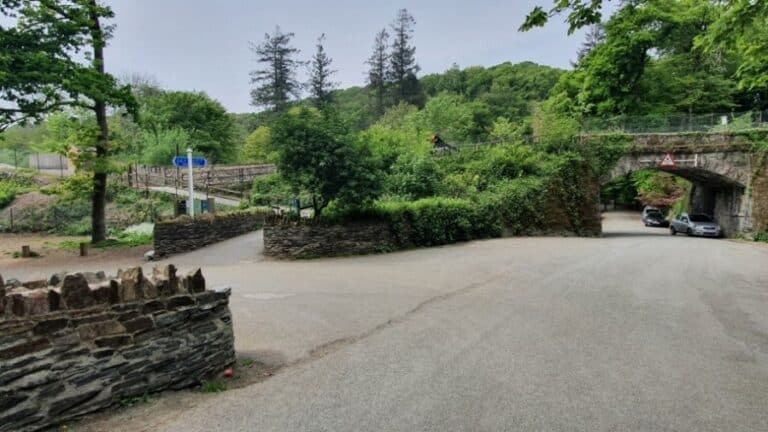
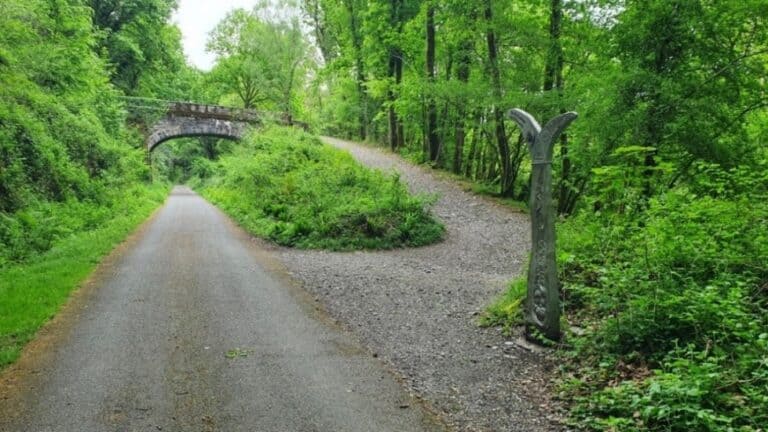
Walk 2 starts at the Coypool Park and Ride car park where there are toilets bike hire and buses to and from Plymouth City Centre. The post code is PL7 4NY. The walk is about 3.5 miles but you could continue on Walk 3 for a 7.5 mile walk if you wish. The first part of the walk is from Coypool to Plymbridge and along this path which is also used by cyclists are some sculptures to look out for. Some are quite hidden.
The return is along the west bank of the Plym and will also take you under Marsh Mills flyover.
From Plymbridge PL6 8AW there was until a few years ago a path that went along the river bank all the way to Shaugh Bridge. Sadly this now does not exist as the permission for the permissive path was withdrawn and in very recent years the river has flooded such that the riverside path has been all but washed away. But there is still a bit you can walk on. Most of the 5.5 mile walk uses the Route 27 Cycle track but you will also come back to the start using an ancient tramway.
If you time it right you could park at Marsh Mills where Walk 2 started from and catch a delightful tourist train which is sometimes pulled by a steam engine to Plymbridge Halt.
This 4 mile walk takes you from Bickleigh railway bridge PL6 7AL to Shaugh bridge where the river Meavy flows into the Plym. A most picturesque spot popular with visitors and picnicers and will be the start of Walk 5.
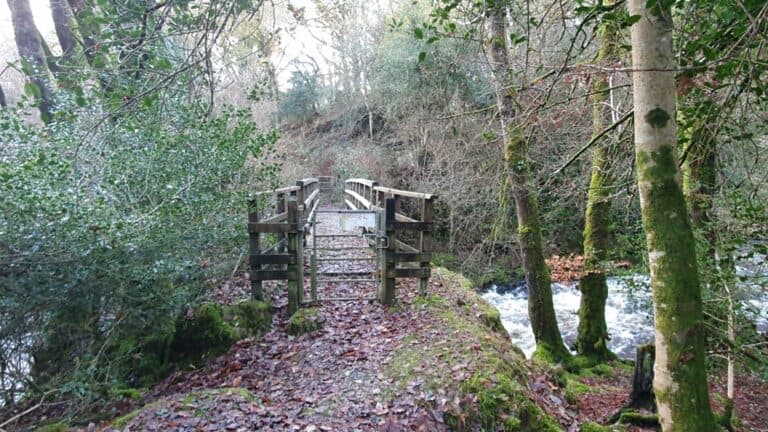
The walk starts on the bridge over the cycle track where Walk 3 ended and is a walk using in part some quiet country lanes. The route back again uses the cycle track. As you can see from the photo the walk will take you once again over the river this time using a wooden footbridge.
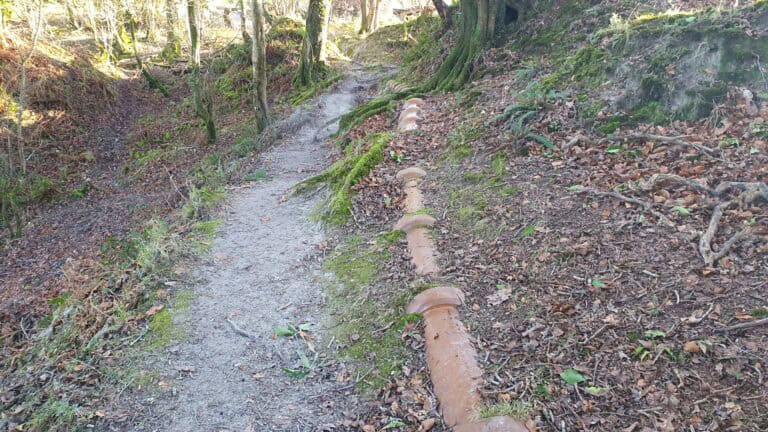
The 4.5 mile walk starts in the car park next to Shaugh Bridge PL7 5HE. The car park was once the loading bay for china clay that was sent down from Cadover in pipes to settling tanks that can be seen above the car park and which you will walk past. The footpath between Shaugh Bridge and Cadover bridge is locally known as the Pipe Track as it follows the pipes which you will see in the path as you walk along it.
On your way back you will walk through a prehistoric fort pass by the Dewerstone rock and walk down a path that was once an inclined plane railway line.
You will probably also walk past an ice cream van.
Cadover bridge PL7 5EH is a very popular location for visitors to come and get up close to the river. In the summer children can often be seen jumping in off Cadover bridge and smaller children will be seen paddling off the sandy banks. There is plenty of space for picnics and an ice cream van is almost permanently on duty throughout the year on sunny days.
I have provided three short walks of increasing difficulty. The first is just a one mile walk along the river bank starting at Cadover bridge and links with the second which is about 2.5 miles long and starts at the car park by the Blacka Brook This walk will take you out onto open moor passing man made rabbit warrens called pillow mounds. The third is quite a challenging 2.5 mile walk on the north side of the river which can only be done in dry weather conditions.
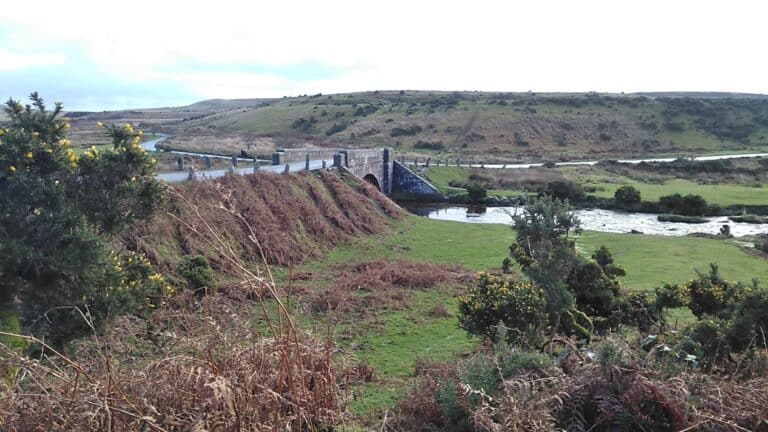
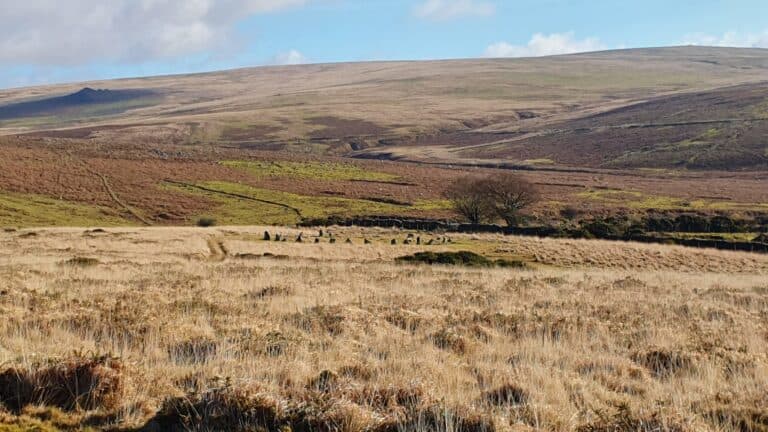
On this walk you will start at a small car park by Ringmoor Cottage PL20 6PQ not where walk 6 finished because the river now is entirely surrounded by open moor there are no roads or bridges. What you will see now are prehistoric enclosures and the remains of dwellings called hut circles. You will walk past Brisworthy stone circle pictured here and through bronze age settlement enclosures.
Although traversing open moor you will be walking on a well used path that is even shown as dotted line on the OS map. You will also walk by pillow mounds some of which are located within the prehistoric settlement enclosures.
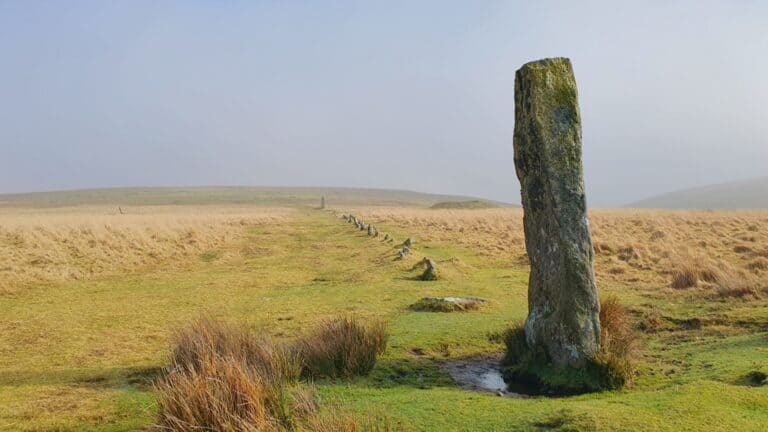
On this final walk you have a choice of either doing a 5 mile loop via Ditsworthy Warren farmhouse and Drizzle Combe to see the giant menhirs with a 3 mile excursion to Plym Head called
Both walks start at “The Scout Hut” now called Gutter Tor Car park PL20 6PG.
With both walks from Plym Ford you are on your own for a half mile tramp to Plym Head. It’s not a difficult walk just a bit soggy in places and Plym Head is actually quite easy to find.
On both walks you will pass through a huge tin mining area known as Eylesbarrow Tin Mine.